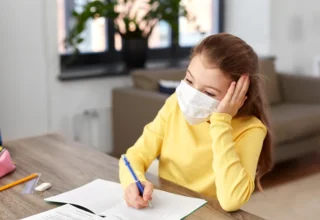

When your child wakes up unwell, the last thing you want is extra worry about school policies and documentation.
Most Irish schools expect parents to provide a sick note when a student misses school due to illness.
Many parents find it confusing to know when a school absence note in Ireland is needed and when a GP letter is required.
This guide breaks down everything you need to know about sick notes for school in Ireland. When they’re required, what to include, how Irish school attendance rules work, and when a medical certificate becomes necessary.
What Is a Sick Note For School?
A sick note for school is a written explanation confirming a student is ill and unable to attend the school for a specific period.
Depending on the school’s attendance policy, this can be:
- A parent / guardian note (school absence note)
- A doctor’s note / medical certificate (for repeated or longer absences)
It serves as an official record that your child was not attending school for health reasons.
Why Schools in Ireland Require Sick Notes
Most schools follow the guidelines set by Education (Welfare) Act, 2000, which requires recording all absences. A sick note helps confirm the reason for absence.
According to the CitizensInformation.ie, “Under the Education Welfare Act 2000 parents must inform the school if their children will be absent from school on a school day and the reason for the absence, such as illness. It is best to do this in writing.”
Short Absences (1–2 Days)
For common illnesses like a cold or stomach bug (stomach flu), a parent note is usually enough.
Schools in Ireland rarely request a GP letter for absences less than 3 days unless absences become frequent.
Long Absences (3–5 Days or More)
If your child is unwell for several consecutive days, many schools request a doctor’s note confirming the illness and advising on the recovery time.
In Ireland, schools must also follow specific Tusla attendance rules.
Under the 20-day rule, schools are legally required to report to Tusla if a child misses 20 or more days in a school year (for any reason).
They must also report to Tusla, if the child’s attendance is “irregular”, not just when absences are due to illness.
Importantly, Tusla’s approach is focused on support first, not punishment.
Repeated or Frequent Absences
If a student has repeated or multiple absences, the school may:
- Ask for medical evidence
- Refer the case to Educational Welfare Officer (EWO)
- Work with you to identify underlying issues
Infectious Illnesses (HSE Guidelines)
Conditions such as flu, COVID-19, chickenpox, conjunctivitis, or strep throat may require:
- Staying home for a minimum period (per HSE public health guidelines)
- A doctor’s note for return-to-school confirmation
HSE provides information about when your child is well enough to go to school or childcare and when to keep them home.
According to HSE, your child can usually go to school or childcare when they’re generally unwell, even if they have one or all of these symptoms:
- Minor cough
- Runny nose
- Mild sore throat
However, you should keep your child at home when they’re having any of these symptoms:
- High temperature (38 degrees Celsius or above)
- Vomiting / Diarrhoea (until they have not been sick or had diarrhoea for at least 48 hours)
- Clearly unwell
- Feeling anxious or worried
Anxiety, bullying, and mental health problems are valid issues impacting students’ attendance.
Learn more about when to seek help for anxiety.
What Should a Sick Note Include?
A sick note doesn’t need to be very long. It should simply include:
- Your child’s full name
- Their class / year
- Dates of absence
- Brief reason for absence (e.g. fever, viral infection)
- Your name & signature
If writing to the principal or class teacher, include the school’s name, as some schools require it for Tusla reporting.
Sample Parent Sick Note For an Irish School
Dear [Teacher/School Name],
Please excuse my child, [Child’s Name], from school on [date(s)] as they were unwell with [brief description, e.g., fever, stomach upset].
They are now recovering and will return once fully well.
Kind regards,
[Your Name]
When is a Doctor’s Note Required for Schools in Ireland?
Irish schools generally only require a GP letter when:
- Absence lasts more than 3–5 days
- The child’s illness affects exams and assessments
- The child needs medication administered during school hours
- There are ongoing or chronic health issues
- Your child needs to be excused from PE for a prolonged period
Parents can provide a doctor’s note via email or app. There is no need for a physical note.
For long-term conditions (asthma, epilepsy, diabetes), schools may require a care plan from an Irish GP or specialist.
Can You Get an Online Sick Note for School in Ireland?
Yes. Many online medical services provide digital medical certificates / sick certs.
These are especially helpful when you can’t get a same-day GP appointment and you need official documentation for the school.
Most schools accept online sick notes as long as they are issued by an IMC-registered doctor.
At Sicknote.com you can get an online sick cert after consultation and approval by an IMC-registered doctor, valid in Ireland and most EU countries—all from the comfort of your home.
Learn more about how to get sick notes online in Ireland.
How to Get an Online Sick Note for School : Step-By-Step Guide
- Choose a reputable Irish telemedicine service (one that uses IMC-registered GPs)
- Have your child’s details ready: full name, class / year, school name, dates you need covered, and brief symptoms
- Book a consultation (phone or video). Many services offer same day consultation
- Attend the consultation and be honest about symptoms and duration
- Request the certificate to include school details (school name, dates, brief reason) and confirm it’s valid for school use
- Receive the sick cert by email (PDF). Save a copy or print and forward it to school as required
- Check your school’s policy. Confirm they accept digital / emailed certificates and whether they want the parents to sign anything
- Keep record of the consultation, certificate, and any correspondence with the school
Tips to Avoid Attendance Issues
To avoid attendance issues in school:
- Inform the school as early as possible
- Follow HSE illness guidelines for when children should stay home
- Keep a quick record of repeated illnesses
- Check your school’s attendance policy. Many schools publish this online.
Sick Notes for Exams or Tests
If your child is sick on:
- An exam day
- A class test
- A practical assessment
Most schools require a doctor’s note to approve special accommodations or rescheduling.
Learn more about sick notes for exams and education.
Common Mistakes to Avoid
Here are some mistakes you should avoid when your child is sick and not able to go to school:
- Sending your child back too soon
- Not notifying the school early enough
- Forgetting to include dates on the sick note
- Not explaining infectious illnesses clearly
- Using vague descriptions like “unwell” repeatedly
Sick notes for school are a simple but important part of Irish school attendance rules. Whether you’re writing a parent note for a minor illness or requesting a GP certificate for a more serious or prolonged illness, clear communication helps schools support your child.
If you’re unsure, check your school’s attendance policy or contact the school office.
Disclaimer: This blog is for general guidance. Attendance policies may vary slightly between schools.