
Healthcare in Ireland is changing rapidly. And one of the biggest shifts in recent years is the rise of telemedicine. Instead of travelling to a GP surgery or waiting in a busy clinic, many people now speak to a doctor from their home, work, or even while travelling—all through their phone or laptop.
But what is telemedicine? How does it work in Ireland? And when is it actually useful?
This guide breaks it all down in a simple way so you can understand how telemedicine fits into our healthcare system today.
What Exactly Is Telemedicine?
Telemedicine is the delivery of healthcare remotely, using telecommunication technologies like phone calls, video calls, or online platforms.
Instead of meeting the doctor face-to-face, you connect with them digitally. This allows you to get medical care from a qualified healthcare professional without being in the same room.
The World Health Organisation (WHO) notes: “Telemedicine – which involves the delivery of health-care services over distance– has the potential to improve clinical management and extend coverage of services.”
How Telemedicine Works in Ireland
Different services use telemedicine in different ways, but generally they fall into these three categories:
1. Phone Consultations
You speak to your GP or doctor over the phone. This is ideal for minor illnesses, follow-ups, mental health check-ins, medication questions, or reviewing symptoms that don’t require a physical exam.
2. Video Consultations
Video provides a more interactive appointment. It’s particularly helpful for illnesses where the doctor may need to see the issue.
For example, skin conditions, eye problems, or mild injuries.
3. Online Assessment Platforms
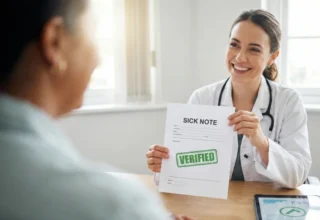
Some Irish telemedicine services allow you to complete a short online medical form. An IMC-registered doctor reviews your information and may provide advice, treatment, prescription, or sick cert, if medically appropriate.
All legitimate telemedicine services in Ireland must follow Irish medical guidelines and must use Irish Medical Council (IMC)-registered doctors.
Learn how to choose an online sick cert provider in Ireland.
Conditions Telemedicine Can Help With in Ireland
Telemedicine is designed to handle many common health issues safely and effectively.
In Ireland, it is commonly used for:
Minor Illnesses
Such as:
- Cold
- Flu
- Sinus Infections
- Urinary Tract Infection (UTI)
Skin Conditions
Such as:
- Rashes
- Acne
- Eczema or psoriasis flare-ups
Follow-Ups and Ongoing Care
Such as:
- Chronic illness management check-ins
- Medication reviews
- Post-treatment follow-ups
Mental Health Support
For conditions like:
Practical and Administrative Needs
Such as:
- Prescription renewals
- Sick certs for work or college
- Medical letters
When Telemedicine is Not Suitable
Even though telemedicine is convenient, it has limits.
There are many conditions that still require an in-person visit to a doctor.
Such as:
- Medical emergencies (chest pain, breathing difficulty, severe injury)
- Conditions requiring physical examination
- X-rays, scans, or blood tests
- Vaccinations
- Complex or uncertain symptoms that need hands-on assessment
A reputable telemedicine provider will tell you if your case needs a face-to-face appointment.
Key Benefits of Telemedicine in Ireland
Telemedicine is becoming popular because it solves real, everyday problems. Its key benefits include:
1. Convenience
No travel, parking, or waiting rooms. You can speak to your doctor from anywhere.
2. Faster Access
Many telemedicine platforms provide same-day or next-day appointments, especially for minor medical issues.
3. Cost-Effective
Online consultations can be more affordable than in-person visits.
4. Improved Rural Access
People living in rural areas or with limited GP access can speak to a doctor from home and avoid long travel.
5. Privacy
Discussing personal health issues from the comfort of home feels safer and more comfortable for many.
6. Fits Modern Lifestyles
Whether you are busy with work or childcare, telemedicine can provide timely medical support without disrupting your day.
Telemedicine Vs In-Person Care : Quick Comparison
| Telemedicine | In-Person Care |
|
Convenient, accessible anywhere |
Requires travel |
|
Great for minor illnesses |
Necessary for physical exams |
|
Often same-day access |
Appointment availability depends on GP |
|
Useful for follow-ups |
Best for complex, serious, or unclear conditions |
|
Good for sick certs and prescriptions |
Required for diagnostics like scans or blood tests |
Is Telemedicine Safe and Legitimate in Ireland?
Yes, as long as the telemedicine service uses Irish Medical Council-registered doctors, follows Irish healthcare regulations, and data protection laws.
Reputable telemedicine providers will:
- Use IMC-registered doctors
- Follow GDPR privacy laws
- Use secure, encrypted systems
- Provide proper documentation (sick certs, medical letters, and prescriptions)
- Refer you to in-person care when necessary
If you’re receiving a sick cert through telemedicine, make sure the issuing GP’s name and IMC number appears on the document.
Telemedicine consultations must meet the same standard of care as in-person.
Doctors must follow the Medical Council’s Guide to Professional Conduct and Ethics.
Telemedicine providers are subject to Irish and EU data protection law (GDPR) and must
keep your medical information secure and confidential.
Public services, such as HSE telehealth and virtual care, are guided by national strategies and roadmaps for digital health.
Learn how to recognize a legally valid sick cert in Ireland.
Telemedicine Vs Telehealth — What’s the Difference?
These terms are related but not the same.
- Telemedicine involves clinical care—diagnosis, treatment, and medical certs
- Telehealth is broader and includes non-clinical support such as provider training, administrative meetings, and continuing medical education, in addition to clinical services
Most people in Ireland use these terms interchangeably, but legally they differ.
How to Prepare for a Telemedicine Appointment in Ireland
A little preparation can make your online GP or telemedicine appointment much more efficient and useful.
Medical Council guidance for patients suggests that you:
- Choose a quiet, private space where you can speak freely without being overheard.
- Check your internet connection, camera, and microphone beforehand if you’re using video.
- Have a list of your current medications, allergies, and key medical history ready.
- Note down your main symptoms, when they started, and anything that makes them better or worse.
- Keep a pen and paper or notes app handy for any instructions or follow-up steps.
- Have a form of photo ID nearby if the service needs to verify who you are.
If the connection drops or you have trouble hearing the doctor, let them know immediately. A reputable telemedicine provider will always reschedule or switch to another format (for example, phone instead of video) if needed.
How Telemedicine Supports Sick Certs in Ireland?
One of the most practical uses of telemedicine today is obtaining a legally valid sick cert.
Instead of going to a GP when you are unwell, an IMC-registered doctor can often assess your condition online and issue a sick cert that meets Irish legal requirements.
A good telemedicine service will include:
- A proper medical review
- IMC-registered doctors
- Clear sick cert wording (“unfit for work”)
- Specific dates and doctor’s details
- Delivery in a secure PDF format
This makes telemedicine a valuable option for workers needing timely documentation.
Telemedicine has become a practical, convenient, and reliable way to access healthcare in Ireland. While it doesn’t replace in-person care, it’s an excellent option for everyday health concerns, follow-ups, and sick certs when you are unwell.
Need a Legitimate Online Sick Cert in Ireland?
Sicknote.com is a safe and reliable platform that provides legally valid online sick certs after consultation and approval by an IMC-registered doctor.
If approved, your sick cert is often issued the same day and is delivered as PDF through email. Our sick notes are valid throughout Ireland and many EU countries.